MARTINEZ, Calif., August 6, 2026. On a Wednesday afternoon, a Contra Costa County Superior Court judge signed an order releasing Marcos Iriarte-Valdez on his own recognizance. By Thursday evening, 68-year-old Todd Stewart lay dead on the lawn outside his Francis Court home, stabbed by the man that same court had just set free.
Iriarte-Valdez, 36, is a Venezuelan national living in the country illegally. The Department of Homeland Security identified him this week and said the killing took place “in sanctuary California,” a pointed reference to the state's limits on cooperation with federal immigration enforcement. He was already on pretrial release before the killing, facing charges tied to a string of residential burglaries committed in Orinda on April 29. Arrested again on August 4 for allegedly violating the terms of his home detention monitoring, he was released a second time the very next day and sent back to the same program he had just been accused of defying.
The monitoring program itself lagged behind the court's decision. Martinez Police Chief Andrew White has said Iriarte-Valdez did not have his home detention equipment placed on him until Friday, a full day after the killing. Officers cannot track an ankle monitor that has not been fitted, nor do judges need equipment to know when a defendant has already broken the terms of his release once.

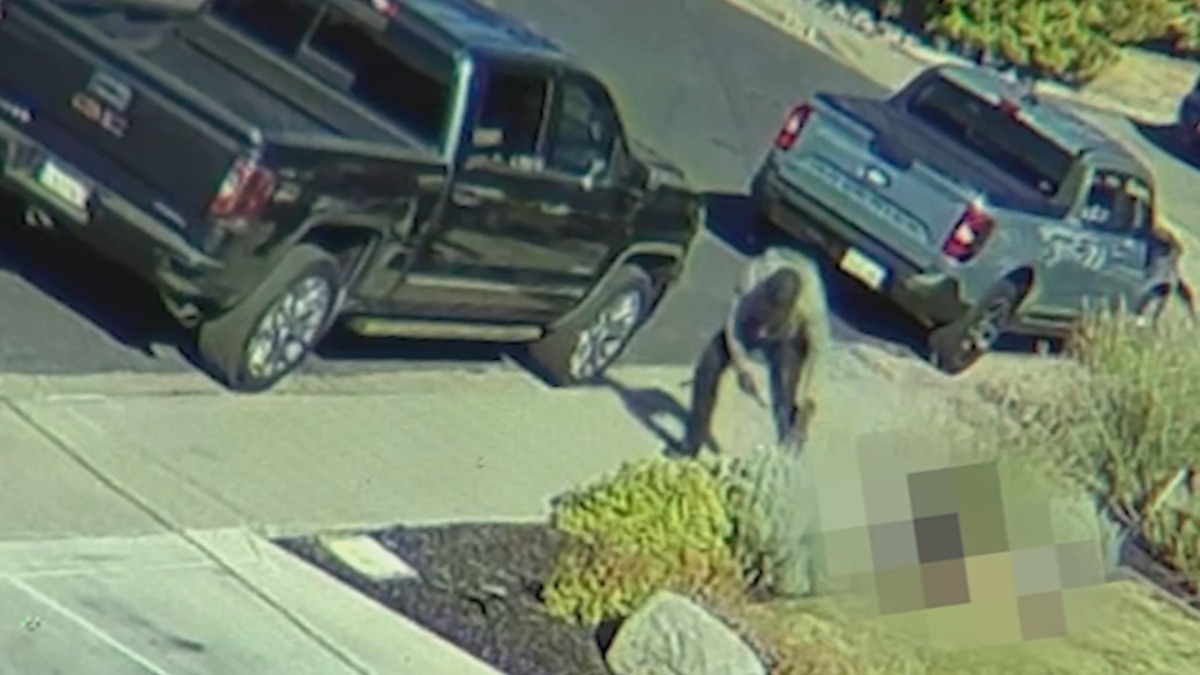
Surveillance video captured a man in tactical gear arriving on Francis Court in an SUV the afternoon of August 6. Stewart, a retired engineer who had lived in the neighborhood for nearly four decades, was working on a project in his garage. Police have found no connection between Stewart and Iriarte-Valdez. Within moments, Stewart was stabbed multiple times and died at the scene, steps from his own front door, while his wife was elsewhere in the home.
The Orinda burglaries were not minor. Police say Iriarte-Valdez broke into two homes in the Orinda Downs neighborhood on April 29, stealing a laptop from an 83-year-old woman's garage and eating food while inside her house. A neighbor a few doors down encountered him the same day, catching sight of him trying her back door before he fled. The woman said she never imagined him “capable of murdering somebody and have a knife with him.”
His record extended well beyond the Orinda case. County booking records show a prior arrest in October 2025 for DUI and a hit-and-run causing property damage. He was also enrolled in a diversion program tied to a misdemeanor violation of a protective order. Despite all of it, and despite his lack of legal status, the courts returned him to the street every time.
Investigators moved quickly after the killing. Using automated license plate recognition technology and tips from residents who recognized the suspect's vehicle, Martinez police traced Iriarte-Valdez to his apartment complex and took him into custody Friday evening without incident. The Contra Costa County District Attorney's office charged him Tuesday with special-circumstance murder, alleging the killing occurred while he was fleeing an attempted burglary. Prosecutors say it was the same pattern he had allegedly followed in Orinda four months earlier: casing a home, then running when confronted. He is now held without bail and is scheduled for arraignment Wednesday.
“It could have been prevented,” said Galina Pasternak, a neighbor who watched the suspect's car idle outside the Stewart home before the attack. Steven Clark, a legal analyst and former prosecutor, put the same question more clinically, asking whether “the pendulum swung too far the other direction.”
Cases like this one follow a familiar shape. A defendant with an open case and a documented violation is handed his liberty back, and the next warning arrives too late for someone else's family. Evan Doerr, Founder and Executive Director of the Preventable Crime Project, called the killing the predictable result of decisions made without regard for the record already in front of the court. “A man who had already violated the terms of his release was granted his liberty again, and within a day, a husband and father lay dead on his own lawn,” Doerr said. “The court had every fact it needed to keep him confined, and it chose otherwise. Todd Stewart paid the price for that choice.” The judge who signed the release order is precisely the kind of official the Preventable Crime Project's Judicial Performance Database exists to hold to account.
The Preventable Crime Project is a nonprofit research organization tracking criminal justice policy and outcomes because everyone deserves to live on safe streets. Check out more stories at preventablecrime.org/news/stories. Learn more at preventablecrime.org/about.
Contact Us: press@preventablecrime.org
More stories
A California parole board overruled prosecutors' objections and freed Darryl Collins, a two-time murderer, in 2020. Fatima Johnson paid for that decision with her life 364 days later.

A man with a stabbing conviction and six parole violations was on probation, not in prison, when he allegedly moved through Oakland's Fruitvale neighborhood for half an hour, killing one man and stabbing four others.
Calese Crowder, the repeat offender dubbed the “Butt Sniffer,” has been accused of the same act at five different Southern California stores in five years; the state's cumulative answer has been 264 days in county jail.