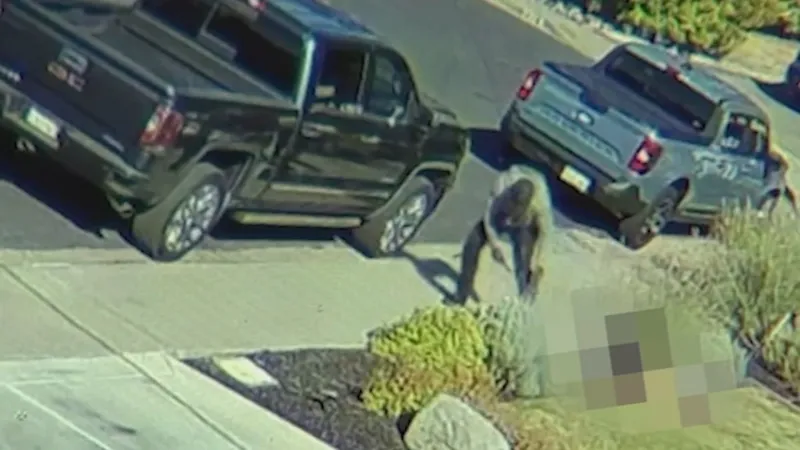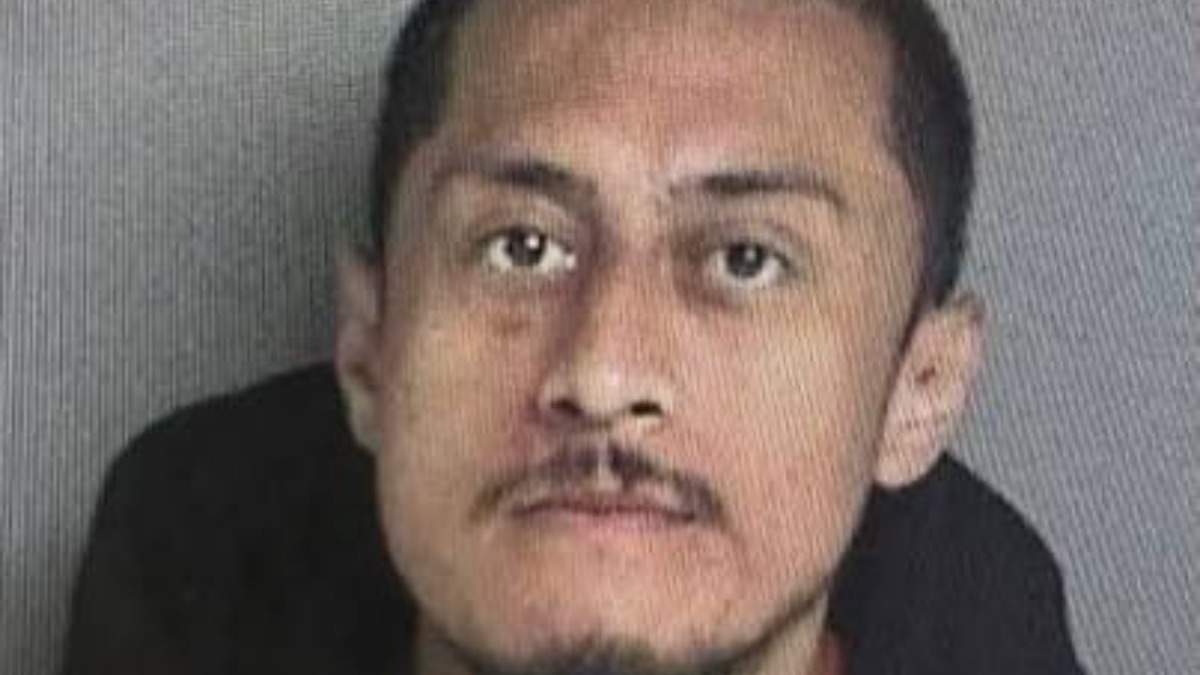
OAKLAND, Calif., August 24, 2026. Just after 7:20 p.m. Monday, Jose Jesus Rodriguez attacked a stranger at Cesar Chavez Park. The victim, 58-year-old Gonsalo Lopez, was a chef known in the neighborhood for bringing home-cooked meals to homeless residents of the park. He died at the scene. Rodriguez did not stop there. Over the next half hour he moved on foot through Oakland's Fruitvale neighborhood, stabbing a homeless man near 38th Avenue and San Leandro Street, another victim near the Fruitvale BART station, and finally two more people near 39th Avenue and International Boulevard, where surveillance video captured him missing a stab at a man riding a moped and striking the man's passenger instead, then attacking a woman as she tried to flee.
Witnesses steered police to the 1500 block of 39th Avenue roughly thirty minutes later, where Rodriguez was taken into custody. He was carrying a knife with a three-inch blade, which he dropped before officers reached him, and he invoked his right to remain silent. Five people were stabbed that evening, one fatally, and all of them were strangers to the man who attacked them. In a statement, Alameda County District Attorney Ursula Jones Dickson called herself "deeply saddened for the victims and their families" left behind by the attack.
None of this should have been possible. At the time of the attacks, Rodriguez was serving a sentence of probation. He now faces charges of murder, four counts of attempted murder, and assault with a deadly weapon.
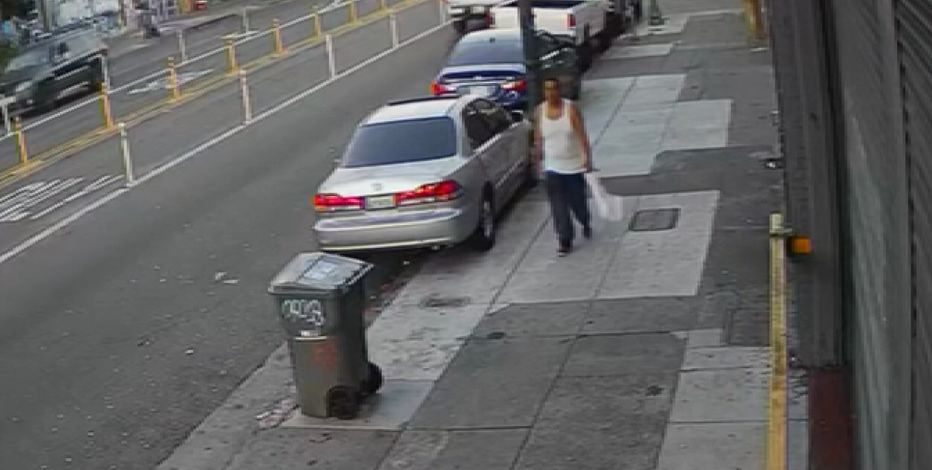
Rodriguez's record did not begin in August. In 2019, he stabbed an Uber driver and a garbage collector in an earlier unprovoked attack. A conviction for assault with a deadly weapon followed in February 2021, and Rodriguez spent 673 days at San Quentin State Prison before his release on parole in 2023. Supervision did not change his behavior. State parole records document at least six violations over that period, among them a June 2025 arrest tied to an assault charge and a breach of a protective order.
In October 2025, Rodriguez headbutted a police officer, attempted to tear off the officer's ear with his teeth, and swung a wooden board that injured two women. His own parole agent warned in writing that Rodriguez's conduct "poses a significant threat to the community." That warning came from the state official assigned to monitor him, not from an outside critic of the system, and the record gives no indication it altered the course of his case.
Prosecutors did not pursue the October 2025 case to the extent the underlying conduct would suggest. In December 2025, Rodriguez pleaded no contest to one reduced charge, assault likely to produce great bodily injury, and prosecutors dropped two accompanying counts of assault with a deadly weapon. A judge sentenced him on January 15, 2026, to two years of probation, a ninety-day stay in a residential program, and a standing warning: any further violation carried the prospect of a year in county jail. That sentence returned a man with a stabbing conviction and six parole violations to the street. Seven months later, prosecutors allege, he picked up a knife again.
Had the October 2025 case produced additional prison time, consistent with the record of a defendant already on parole for a violent stabbing, Rodriguez would have been incarcerated rather than free to walk through Cesar Chavez Park, the Fruitvale BART station, and International Boulevard on August 24.
Rodriguez has been described in court records as unhoused and as living with mental illness. Neither description answers why a defendant with a stabbing conviction, six parole violations, and a documented assault on a police officer was assessed as fit for probation rather than incarceration. That determination was made by people who held the authority to choose otherwise.
The half hour Rodriguez spent moving through Fruitvale was not a failure of foresight. It was the predictable outcome of a system that treats a felony assault on a police officer, committed by a man already on parole for a prior stabbing, as a matter to be resolved through a reduced plea and a residential program rather than incarceration. Evan Doerr, Founder and Executive Director of the Preventable Crime Project, said the case follows a pattern this organization has now documented at length. "A man with a stabbing conviction and six parole violations was permitted to plead his way into a term of probation despite a written warning from his own parole agent. The entire situation is absurd," Doerr said.
The Preventable Crime Project is a nonprofit research organization tracking criminal justice policy and outcomes because everyone deserves to live on safe streets. Check out more stories at preventablecrime.org/news/stories. Learn more at preventablecrime.org/about.
Contact Us: press@preventablecrime.org
Calese Crowder, the repeat offender dubbed the “Butt Sniffer,” has been accused of the same act at five different Southern California stores in five years; the state's cumulative answer has been 264 days in county jail.

A California parole board overruled prosecutors' objections and freed Darryl Collins, a two-time murderer, in 2020. Fatima Johnson paid for that decision with her life 364 days later.

A Contra Costa County judge released Marcos Iriarte-Valdez on his own recognizance one day before he allegedly stabbed 68-year-old Todd Stewart to death outside his Martinez home.