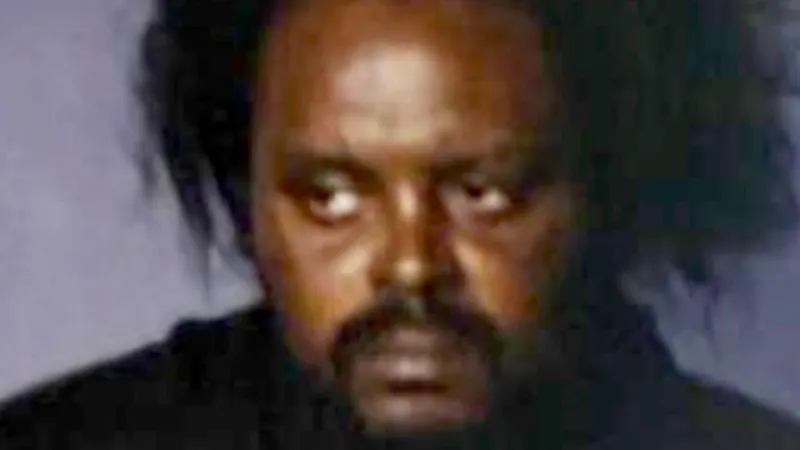
CAMBRIDGE, Mass., May 11, 2026. A little after 1 p.m. on a Monday afternoon, a man carrying a rifle allegedly walked into the middle of Memorial Drive, a block from Harvard's campus, and began firing at the cars around him. Authorities say he kept walking and kept firing for several minutes, aiming at vehicles, at a Massachusetts State Police cruiser, and into the air, while commuters abandoned their cars mid-lane. Court documents would later put the number of spent casings recovered from the roadway at 70. Two men in separate vehicles were struck. Casimir Bangoura, 37, was hit four to five times in the arm and legs. A second driver, identified by his family only as Felix, a longtime MBTA paratransit driver and father of eight, was shot in the back of the head, according to prosecutors. Both survived.
The shooting ended when a State Trooper and an armed civilian, a former Marine licensed to carry, shot the gunman multiple times in the extremities. He was identified by the Middlesex District Attorney's office as 46-year-old Tyler Brown of Boston. “What happened today cannot stand,” Middlesex District Attorney Marian Ryan said that evening. It was a strange thing to have to say. The system had already been told, repeatedly, exactly what Tyler Brown was capable of, and let him walk free anyway.
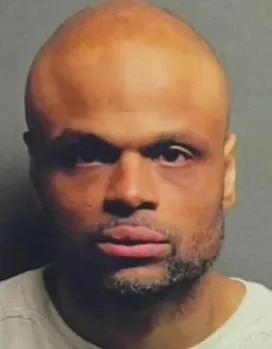
The clearest failure came five years earlier, and it was not a mystery to anyone paying attention. In May 2020, Brown fired roughly 13 rounds at Boston police officers who approached him on Massachusetts Avenue. He pleaded guilty to eight charges, including assault to murder. Even then-Suffolk County District Attorney Rachael Rollins, a prominent progressive, soft-on-crime prosecutor, had her office ask the court for 10 to 12 years. Suffolk Superior Court Judge Janet Sanders gave him five to six, a term made possible in part by a 2008 drug conviction that had already been thrown out amid the state's broader drug-lab scandal, wiping out the mandatory minimum Brown would otherwise have faced. Rollins herself publicly criticized the outcome as too lenient. The Boston Police Patrolmen's Union called it “a ball drop.” Brown was released from MCI Shirley in May 2025, having served roughly three and a half years for shooting at police officers, atop a record that already spanned three decades and included armed robbery, a prison escape, repeated drug convictions, a stabbing, and witness intimidation. Had the court imposed even the sentence prosecutors requested, Brown would still have been behind bars on May 11, 2026. Given that record, there was never a credible public-safety case for leniency at all; the only question the system left open was how many more people he would be allowed to hurt once he was out.
Brown was still on parole and probation for that 2020 case, and for the 2014 stabbing and witness-intimidation conviction that preceded it, when the Memorial Drive shooting occurred; his parole term was set to expire that same week. Three days before the shooting, he had been released from a psychiatric hospital. About eighty minutes before the first shots were fired, his parole officer warned Boston police that Brown was armed and suicidal, after watching him wave a rifle on a video call and say, “I'm not going back to prison.” The warning did not stop him. Yet the warning was never the real point of failure. A properly incarcerated man does not need to be tracked down by cellphone ping in the middle of an active-shooter response; he is simply not there to shoot anyone.

At the time of the shooting, Brown was under supervision for an extensive list of firearms and violent offenses, including armed assault to murder, three counts of assault with a dangerous weapon, and multiple counts of illegal firearm possession, a supervision caseload that should itself have been a warning sign. He now faces eight additional charges stemming from Memorial Drive, including two counts of assault to murder with a firearm and illegal possession of a large-capacity firearm. He pleaded not guilty on May 14 and has been held without bail since a dangerousness hearing on May 21; the case has twice been delayed on its way to a grand jury, most recently to a July 23 hearing.
Every point of contact the system had with Tyler Brown pointed toward the same conclusion, and the system reached a different one anyway. A career criminal with a violent record dating back three decades, who had already tried to kill police officers once, was handed a sentence half of what prosecutors asked for and was free within five years to do it again, this time to strangers on a public street. “This was not a supervision failure. It was a sentencing failure,” said Evan Doerr, Executive Director of the Preventable Crime Project. “A man with Tyler Brown's record should not have been in a position to be tracked, warned about, or worried over on May 11. He should have still been serving the sentence his own prosecutors asked for, if not something far longer given everything we now know about him. We cannot keep allowing judges to let a three-decade violent record end in five to six years.”
Our founder was a Harvard student a block from where it happened, spent that afternoon on the phone confirming classmates were safe, and turned that day's frustration into the Preventable Crime Project.
The Preventable Crime Project is a nonprofit research organization tracking criminal justice policy and outcomes because everyone deserves to live on safe streets. Check out more stories at preventablecrime.org/news/stories. Learn more at preventablecrime.org/about.
Contact Us: press@preventablecrime.org
More stories
Calese Crowder, the repeat offender dubbed the “Butt Sniffer,” has been accused of the same act at five different Southern California stores in five years; the state's cumulative answer has been 264 days in county jail.

Repeat offender Fale Pea, freed by a lenient 2012 sentence and a 2025 wave of dismissed charges, randomly blinded 75-year-old Jeanette Marken in Seattle.

Shaquan Seth, arrested nearly 150 times, walked free without bail twice in ten weeks before a Queens judge finally set bail after his third arrest.